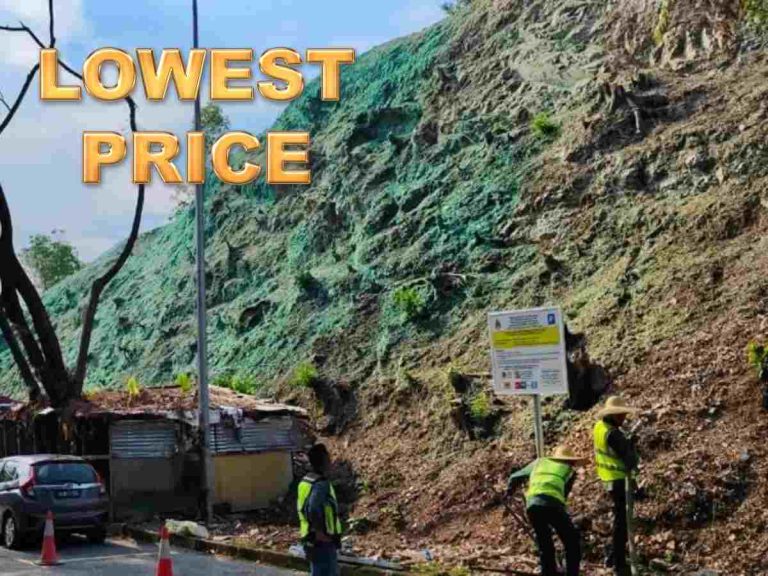
Proven Hydroseeding Work — Green in 7–14 Days
Hydroseeding Work: Fast, Effective & Eco-Friendly Vegetation Establishment
Hydroseeding work has become a widely used method in Malaysia for establishing grass, preventing erosion, and restoring bare soil on construction sites. It is valued for its speed, coverage, cost efficiency, and environmental impact, especially on slopes, embankments, platforms, and rehabilitation areas.
In this guide, we’ll break down what hydroseeding is, how hydroseeding work is carried out, and why many contractors and developers are adopting it.
What is Hydroseeding Work?
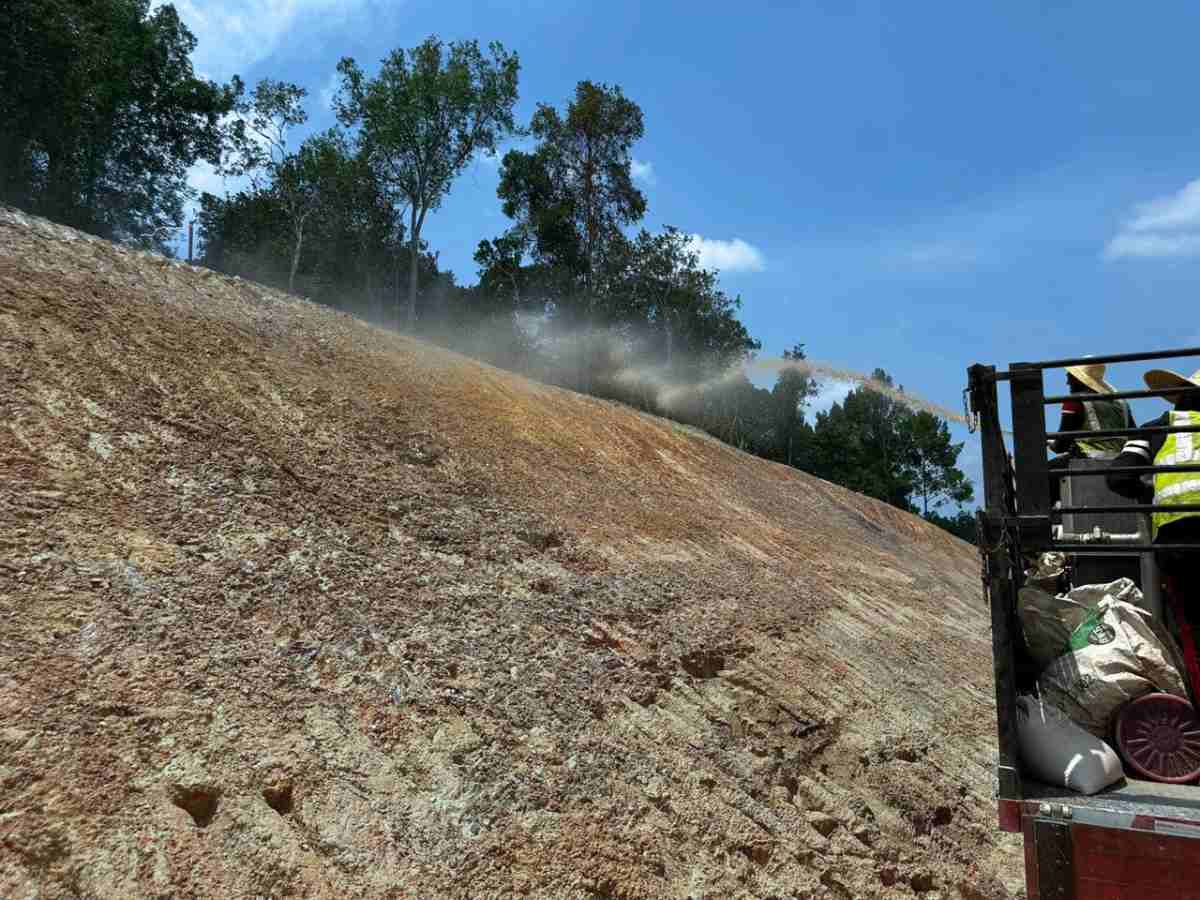
Hydroseeding is a planting technique that sprays a slurry mixture of seeds, mulch, fertilizer, water, and binder onto exposed soil. The slurry is pumped through a hose or turret, allowing large areas to be covered quickly and evenly.
Typical ingredients for hydroseeding include:
-
Grass Seeds — e.g. Bahia, Axonopus, Vetiver
-
Mulch — retains moisture, protects seeds
-
Fertilizer — boosts early germination
-
Tackifier/Binder — helps slurry stick to soil
-
Water — activates and distributes mix
-
Soil Amendments (optional)
The finished result is a uniform green coverage that promotes fast germination and long-term stability.
Why Hydroseeding Work is Preferred
Hydroseeding has several advantages over manual seeding and turfing:
1. Fast Coverage of Large Areas
The spraying method allows fast mobilization over open land and steep terrain.
2. Lower Cost Compared to Turfing
Hydroseeding typically requires less labour and material, making it more economical for large project areas.
3. Better Moisture Retention
The mulch layer protects seeds from drying out, leading to higher germination rates.
4. Erosion Control on Slopes
Hydroseeding is commonly used on slopes because root structures help hold the soil together.
5. Environmentally Friendly Solution
It promotes green vegetation that reduces dust, heat, and surface runoff.
Common Applications of Hydroseeding Work
Hydroseeding work is frequently carried out for:
✔ Construction and earthworks
✔ Highway & expressway slopes
✔ Retention ponds & reservoirs
✔ Quarry rehabilitation
✔ Landfill restoration
✔ Riverbank stabilization
✔ Industrial platforms
✔ Housing & development areas
Whether flat or steep, hydroseeding can be adapted to various terrains.
How Hydroseeding Work is Done
A typical hydroseeding job involves several steps:
1. Site Preparation
-
Remove debris, stones, and construction waste
-
Light soil loosening if compacted
-
Ensure minimal surface water
2. Mixing in the Hydroseeder
All components — seeds, mulch, fertilizer, tackifier, and water — are loaded into the tank and agitated until uniform.
3. Spraying the Slurry
Operators spray the mixture using:
-
Hose (for tight/steep corners)
-
Turret (for long-distance spraying)
Coverage is kept even to avoid patchiness.
4. Watering & Maintenance
After application:
-
Watering is needed during early weeks
-
Fertilization may be applied if required
-
Traffic should be restricted on fresh areas
Hydroseeding Growth Timeline
Typical growth results in Malaysia:
-
Day 1: Green tint visible due to mulch color
-
7–14 Days: Seed germination begins
-
4–8 Weeks: Full coverage develops
-
3–6 Months: Strong root anchoring and slope stabilization
Weather, soil fertility, and seed type will affect results.
Types of Seeds Used in Hydroseeding Work
Different projects require different species:
🌱 Bahia Grass (Paspalum Notatum)
– Drought tolerant, suitable for slopes
🌱 Axonopus Compressus (Cow Grass/Rugby Grass)
– Low maintenance, ideal for landscaping
🌱 Vetiver Grass
– Deep roots, used for strong erosion control
🌱 Mixed Slope Species
– Used for infrastructure and restoration
Seed selection depends on:
-
Terrain gradient
-
Water availability
-
Soil composition
-
Project requirement
Cost Factors for Hydroseeding Work
Hydroseeding pricing varies based on:
-
Total area (m²)
-
Seed type and rate
-
Mulch & tackifier requirement
-
Site accessibility
-
Water availability
-
Compliance to specs (JKR/JPS/etc.)
Most contractors will request site information before quoting to ensure accurate costing.
Who Uses Hydroseeding Work in Malaysia?
Hydroseeding is commonly used by:
🏢 Developers & Main Contractors
🌿 Environmental restoration companies
🏗 Earthwork & infrastructure contractors
🚧 Highway concessionaires
✨ Government & municipal projects
As environmental standards increase, hydroseeding continues to gain traction for sustainable land management.
Conclusion
Hydroseeding work is a fast, reliable, and cost-effective method for establishing grass and controlling erosion across various terrains. With proper technique and maintenance, it delivers uniform vegetation, slope stability, and long-term ecological benefits.
Need Hydroseeding Work for Your Project?
We provide supply + installation for:
✔ Slope protection
✔ Infrastructure & earthworks
✔ Reservoir & pond areas
✔ Quarry & environmental rehab
✔ Development platforms
📲 WhatsApp: 018-297 3716
🌐 Website: Hydroseeding Malaysia