Hydroseeding Slope Protection: Fast, Effective & Eco-Friendly Erosion Control 2026
Hydroseeding Slope Protection: Effective, Fast & Economical Erosion Control
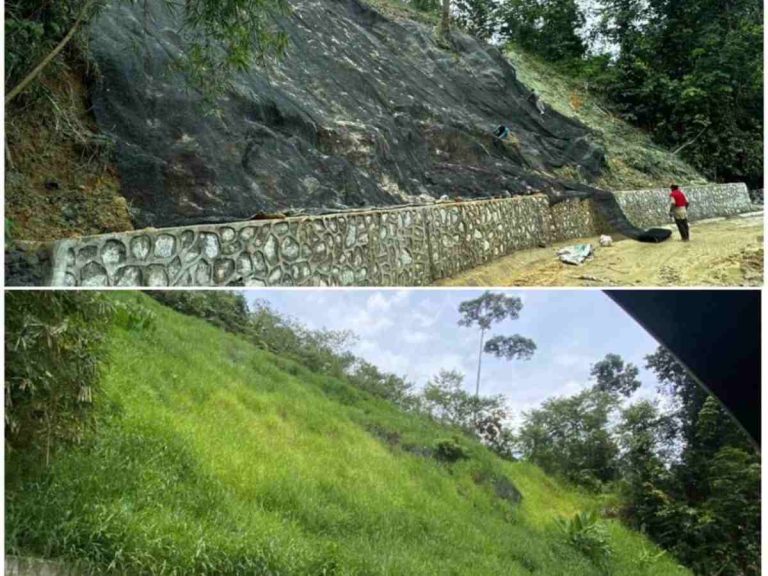
Hydroseeding has become one of the most preferred methods for slope protection in Malaysia — especially for highway embankments, reservoirs, development sites, and infrastructure projects. Compared to traditional turfing or matting, hydroseeding offers faster coverage, stronger root bonding, and lower labour cost.
In this guide, we’ll explain how hydroseeding works, why it is effective for slope protection, and where it’s commonly used.
What is Hydroseeding Slope Protection?
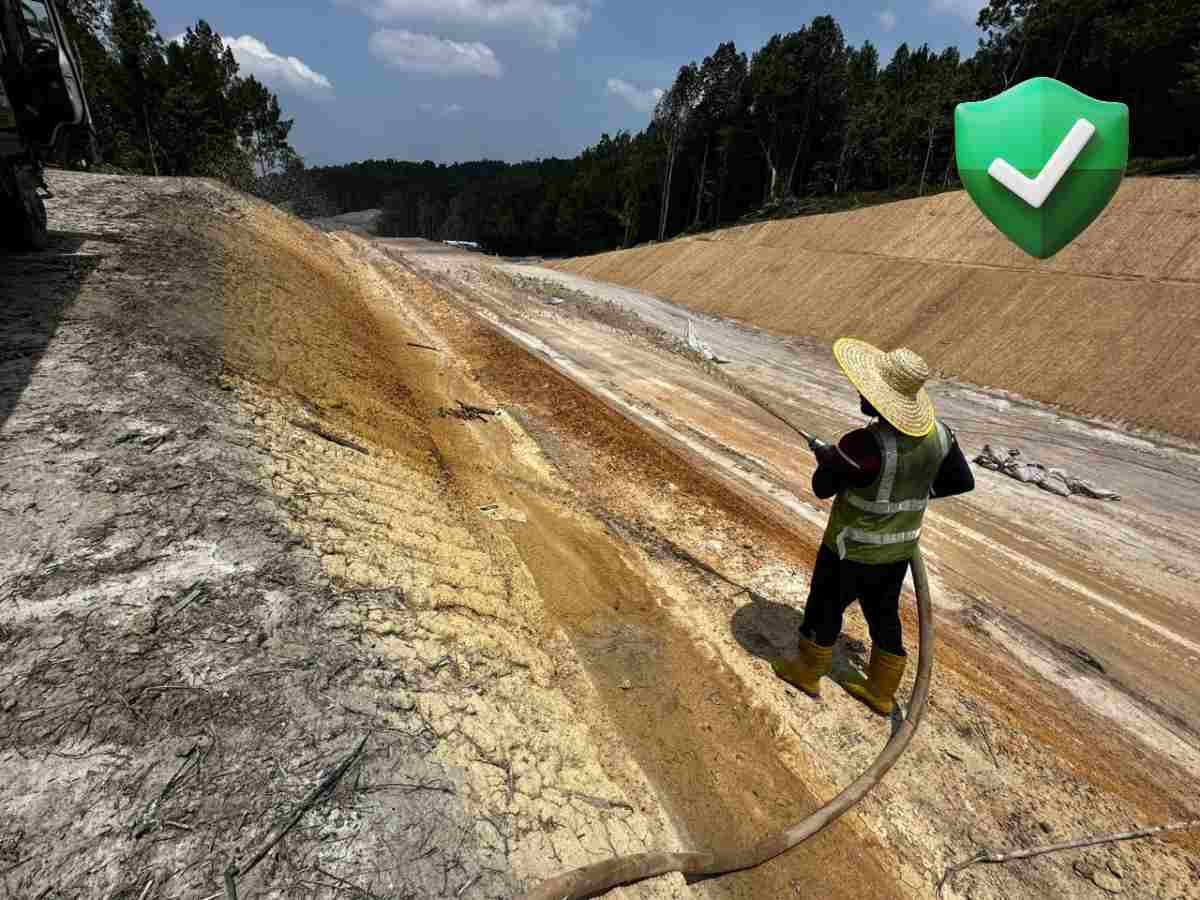
Hydroseeding is a vegetation establishment method that sprays a slurry mixture of:
-
Seeds
-
Mulch
-
Fertilizer
-
Water
-
Tackifier (binder)
-
Soil amendments (optional)
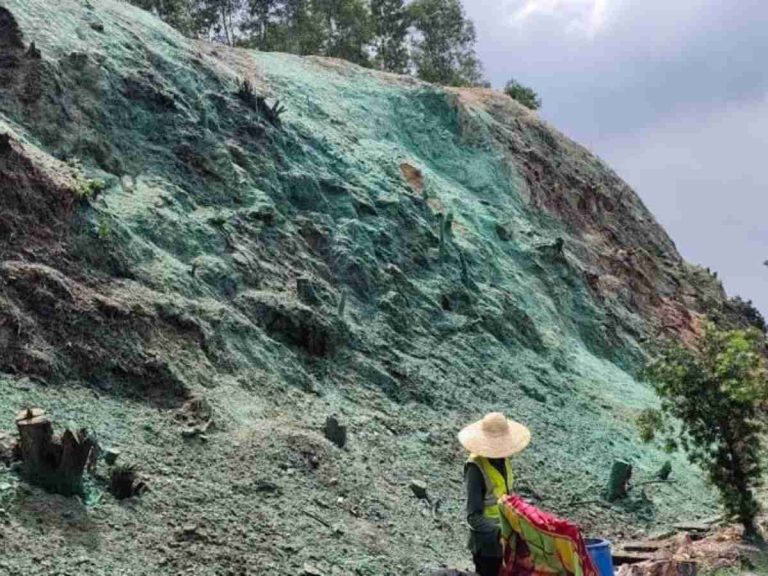
This slurry is pumped through a hose or cannon to cover bare soil efficiently, especially on steep or hard-to-reach slopes.
Why Hydroseeding for Slope Protection Works
Slope areas are prone to erosion due to rain, gravity, and lack of vegetation. Hydroseeding solves this by:
1. Rapid Vegetation Growth
The mulch in the mixture retains moisture, helping seeds germinate faster.
Average growth timeline:
-
7–14 days: New shoots visible
-
4–8 weeks: Thick grass coverage
-
3–6 months: Fully established slope
2. Strong Root Reinforcement
Grass roots create a natural “netting system” that:
-
Anchors soil together
-
Reduces surface runoff
-
Minimizes erosion
3. Uniform Coverage
Spraying ensures even seed distribution — especially better than manual broadcasting.
4. Cost Efficient
Hydroseeding often costs less than:
-
Turfing
-
Geotextile blankets
-
Concrete turfing
Because it reduces manpower and material waste.
5. Environmentally Friendly
Hydroseeding Slope Protection promotes green slopes, better water absorption, and reduces dust pollution.
Where Hydroseeding Slope Protection is Commonly Used in Malaysia
You will see hydroseeding frequently on:
✔ Highway slope embankments
✔ Expressway interchanges
✔ Hill cutting areas
✔ Industrial earthworks
✔ Reservoir & riverbanks
✔ Retention ponds
✔ Land development platforms
✔ Quarry restoration areas
Government agencies and contractors such as JKR, DID/JPS, MBSA, Gamuda, and others often specify hydroseeding for compliance and environmental restoration.
Types of Seeds Used for Slope Protection
Different grasses are selected based on climate & soil:
🔹 Bahia Grass (Paspalum Notatum) – drought resistant
🔹 Rugby Grass (Axonopus Compressus) – low maintenance
🔹 Vetiver Grass – deep root system for high protection
🔹 Mixed Slope Seeds – multi-species for resilience
Choice depends on:
-
Slope gradient
-
Soil fertility
-
Rainfall exposure
-
Project requirement
Hydroseeding vs Conventional Slope Protection Methods
| Method | Pros | Cons |
|---|---|---|
| Hydroseeding | Fast, economical, green, strong root binding | Needs water management |
| Turfing | Instant green look | High labour, cost & soil prep |
| Geotextile | Controls erosion immediately | Doesn’t offer permanent vegetation |
| Concrete turfing | Very strong structurally | Not environmentally friendly, costly |
| Tree planting | Long-term stability | Slow growth, not suitable for all slopes |
Hydroseeding wins especially when vegetation-based erosion control is required.
Success Factors for Hydroseeding Slope Projects
To maximise success, contractors must ensure:
✔ Soil Preparation
Remove rocks, debris, and loosen compacted soil.
✔ Proper Mulch Ratio
Mulch protects seeds and retains moisture.
✔ Adequate Watering
Critical during the first 3–4 weeks.
✔ Rainfall & Timing Analysis
Avoid spraying right before heavy storms.
✔ Maintenance Monitoring
Includes fertilization if soil is poor.
How Long Does It Take to See Results?
Growth timeline for typical Malaysian slopes:
-
Day 1: Green tint visible due to mulch
-
Day 7–14: Seed germination begins
-
Week 4–8: Full grass coverage
-
Month 3–6: Strong root system & stable slope
Performance may vary based on soil pH, weather, and seed selection.
Cost of Hydroseeding for Slope Protection (Malaysia)
Pricing depends on:
-
Total area (m²)
-
Slope angle
-
Seed type
-
Access difficulty
-
Water availability
-
Project specification
For accurate costing, contractors usually conduct site assessments before quoting.
Conclusion
Hydroseeding is a proven and efficient slope protection method widely used across Malaysia’s infrastructure and development sectors. It provides rapid vegetation cover, strong soil reinforcement, and long-term erosion control at an economical cost.
As environmental regulations tighten and green engineering becomes more common, hydroseeding continues to gain traction for sustainable slope management.
Need Hydroseeding for Your Slope Project?
We supply & install hydroseeding for:
✔ Earthwork & infrastructure
✔ Highway & expressway
✔ River & reservoir
✔ Quarry & restoration projects
📲 WhatsApp: 018-297 3716
🌐 Website: Hydroseeding Malaysia